Energy Producers Call for Stronger Power Purchase Agreements to Unlock Electricity Investment in the DRC
DRC Mining Week 2026: Energy Experts Say Power Purchase Agreements Are Key to Unlocking Electricity Investment and Mining Growth
Energy stakeholders in the Democratic Republic of Congo are calling for stronger investment frameworks, particularly through power purchase agreements (PPAs), to unlock financing for electricity generation and address persistent power shortages affecting the mining and industrial sectors.
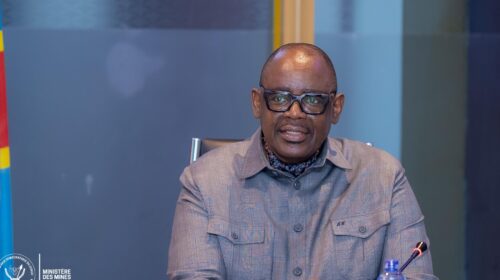
Speaking during a high-level panel at the 21st edition of DRC Mining Week, energy producer and Kipay Energy Chief Executive Officer Eric Monga said the country’s energy challenge is not a lack of resources, but a failure to effectively structure and secure investment in generation capacity.
He emphasized that PPAs between independent power producers and mining companies have become the most reliable mechanism for making energy projects bankable and attracting both local and international financing.
PPAs seen as key to financing new power projects
According to Monga, private-sector mining companies have become more dependable off-takers for electricity compared to public utilities, enabling energy producers to secure financing more easily.
“Power purchase agreements can be signed with the public sector or with SNEL, but there is often hesitation due to concerns about technical reliability,” he said.
“On the other hand, agreements with mining companies provide stronger guarantees. When a mining company signs a PPA, it becomes a form of security that allows financing from both national and international lenders.
It is difficult to move away from the mining sector because it provides the bankability required to develop projects.”
He added that while the DRC has abundant hydroelectric potential particularly from the Congo River and the Inga Dam many mining operations and communities continue to face chronic electricity shortages.
Financing constraints and sector risks
Monga noted that electricity generation projects remain difficult to finance due to narrow profit margins, typically ranging between 10% and 12%, which investors often consider insufficient without strong contractual guarantees.
“If your margin is around 12%, lenders are not willing to finance the project unless there are strong guarantees,” he explained.
He also stressed the need to better integrate social and regulatory obligations such as requirements to supply local communities into the financial structuring of energy projects to ensure long-term viability.
“We need to develop solutions that balance profitability with social obligations,” he said.
Call for stronger coordination and policy clarity
Since the liberalization of the electricity sector in 2014, several independent power producers have entered the market alongside the state utility SNEL to serve industrial users, particularly in mining regions.
However, Monga said coordination challenges between state institutions, regulatory uncertainty, and inconsistent fiscal policies continue to slow investment.
He pointed to recent concerns over proposed fiscal measures that could impose additional charges on locally produced electricity, arguing that such policies risk undermining investment incentives.
“Everyone is talking about energy development. Yet at the same time, new charges on locally produced electricity are being discussed.
If production can be made more competitive through lower taxation, it would unlock more energy supply, more local processing, and ultimately more revenue for the state,” he said.
Investment ecosystem showing signs of progress
Despite these challenges, Monga highlighted positive developments in the DRC’s investment landscape, including support from institutions such as ANAPI, the emergence of local insurance markets, and growing interest from development financiers such as Afreximbank and the African Finance Corporation in independent power projects.
He also emphasized that the country has the technical capacity, natural resources, and human capital needed to significantly expand domestic electricity generation.
Energy seen as foundation for industrial growth
Monga concluded that the DRC’s energy challenge is fundamentally about execution rather than potential, noting that abundant hydropower, solar resources, and local expertise could transform the country’s industrial base if properly mobilized.
He called for stronger collaboration between government, private investors, and energy producers to accelerate project development and ensure reliable electricity supply for mining and broader economic activity.
“Energy is the foundation of everything. Without it, there is no industrialization, no processing, and no economic transformation,” he said.