G7 Critical Minerals Strategy Triggers China’s BRICS-Led Supply Chain Realignment
G7 push to cut China rare earth dependence sparks BRICS cooperation as Beijing strengthens global minerals strategy
The Group of Seven (G7) has intensified efforts to reduce reliance on China for critical minerals, a move that is prompting a coordinated geopolitical response from Beijing through deeper cooperation within the BRICS bloc.
G7 leaders have agreed to work toward lowering dependence on China for rare earth elements and permanent magnets to below 60% by 2030, with a longer-term target of 50%.
The strategy includes joint stockpiling arrangements, expanded recycling capacity, and a new monitoring framework supported by the International Energy Agency to track supply risks and coordinate emergency responses.
The initiative reflects growing concern among Western economies over China’s dominance in critical minerals processing, particularly rare earths, where it accounts for roughly 90% of global output in key downstream segments used in electric vehicles, defence systems, and advanced electronics.
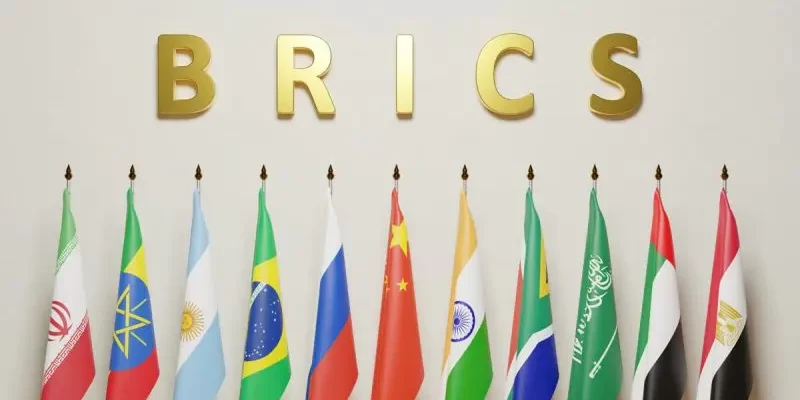
In response, China is strengthening alignment with BRICS partners to reinforce its position across global supply chains. Speaking at the 16th Meeting of BRICS National Security Advisors, Chinese Foreign Minister Wang Yi said Beijing is prepared to deepen cooperation on strategic minerals, energy security, and global governance reform, while advocating stronger multilateral coordination and resistance to protectionist measures.
The BRICS framework is increasingly being positioned by Beijing as a counterweight to Western-led supply chain restructuring efforts.
Rather than relying solely on domestic resources, China is embedded across multiple BRICS economies that collectively form a broad critical minerals network spanning production, processing, and consumption.
This includes strong Chinese involvement in cobalt and copper production in the Democratic Republic of the Congo and Zambia, expanding lithium and manganese exposure in Zimbabwe, and growing engagement in Brazil’s niobium, lithium, and nickel sectors. Russia remains a major supplier of nickel and palladium, while India plays an expanding role in downstream manufacturing and refining ambitions.
This distributed structure gives BRICS a strategic advantage in global mineral flows, allowing China to maintain influence across key segments of the value chain even as Western economies attempt to diversify away from Chinese processing dominance.
The G7 strategy, therefore, does not create a simple split in global supply chains but instead accelerates a more complex realignment.
While Western countries aim to reduce dependence on China, their alternative supply routes increasingly intersect with BRICS-linked production networks where China already holds significant influence.
As a result, the global critical minerals landscape is evolving into a layered system of competing and overlapping supply chains, with BRICS playing a central role in shaping resilience, access, and strategic balance in the sector.